Sunday, January 25, 2015

Sunday, October 26, 2014
Blog Post 4: The Seven Deadly Sins

The advertisement above is for the 2013 Lexus GS. It was published in late 2012 by Lexus. In this advertisement, a blonde woman is placed next to the car being advertised. She is in a silver bikini and holding a motorcycle helmet. The inclusion of the woman, and her attire suggest to the viewer that having this particular car could get them a woman like her or at least impress them. Based on this its seems the intended audience is who can afford a car like this, are heterosexual, and have or desire, popularity and high social status. This also suggests the intended audience is aware of their surrounding social norms and would find this layout appealing.
The author uses the stereotypical image of a pretty blonde girl in a bikini to draw the viewers attention and intrigue them. The author also uses a simple layout with minimal text to emphasize the visual given. In the included text the author uses informal language that a range of audience members could understand and in a sense uses a pun to entertain the viewer. The advertisement uses white and silver throughout the entire advertisement. This color scheme emphasizes the visual image and the text as well. In this case mass media uses language to persuade the viewer that the car can handle anything. It also uses a stereotypical small blonde woman in a bikini to persuade and entertain the viewer. Altogether this advertisement exhibits two of the seven deadly sin: lust and avarice. This advertisement showcases how the media uses the seven deadly sins as well as stereotypes to sell products.
Sunday, October 12, 2014
Sunday, September 28, 2014
What's in a Name?
My name is one of the things I love most about myself. It serves as far more than something to be called by. For me, my name is my legacy, to an extent, my identity. My name has a ton of meanings but the one that stuck out to my parents was "Devoted One". In my family, the names go in alphabetical order based on age; My eldest sister's name is Achley, my second eldest sister's name is Bethany, then of course there's me, Camille. After me, my little sister's name is Dorea. Unfortunately my parents broke tradition with my little brother John III, but we'll forgive them eventually. My middle name is Elaine. I share my middle name with my aunt, as do all of us girls in my immediate family. In this sense, my name makes it easy to identify which one of the Thompson girls I am; I'm the C-one, so I was born third. One thing I've always noticed about my name is the reaction I get sometimes. My best friend told me when we had our first class together and my name was called for attendance, she immediately looked for a Caucasian girl. This isn't the first time I'd been told I have a "white name". One of my dad's coworkers was sure my mother was white when he told them her name and all of our names. It's never bothered me, but it has always made me wonder how I would've been received by some if my name was a "black name", if a such thing indeed exists.
The list of my nicknames is extensive. From Cammy, Cam, Cece, Cammy Wammy, to Laney, which comes from my middle name Elaine, the list never ends. I answer to them all, but ultimately from close friends. If someone I don't know called me Cammy, I'd be slightly offended because, for me, if I allow you to call me something other than Camille, it's because I have some sort of personal relationship with you. As for marriage, I think I would change my last name because I feel that it would be part of showing commitment to that person and, in a sense, giving them a piece of me personal identity to show what they mean to me. Altogether my name is a piece of me, at the end of the day when I'm gone, my name will be what carries my memory. My name is Camille Elaine Thompson. There won't be another,and that, is something I treasure.
Sunday, September 14, 2014
Atwood vs. Huie
Two Ways of "Othering"
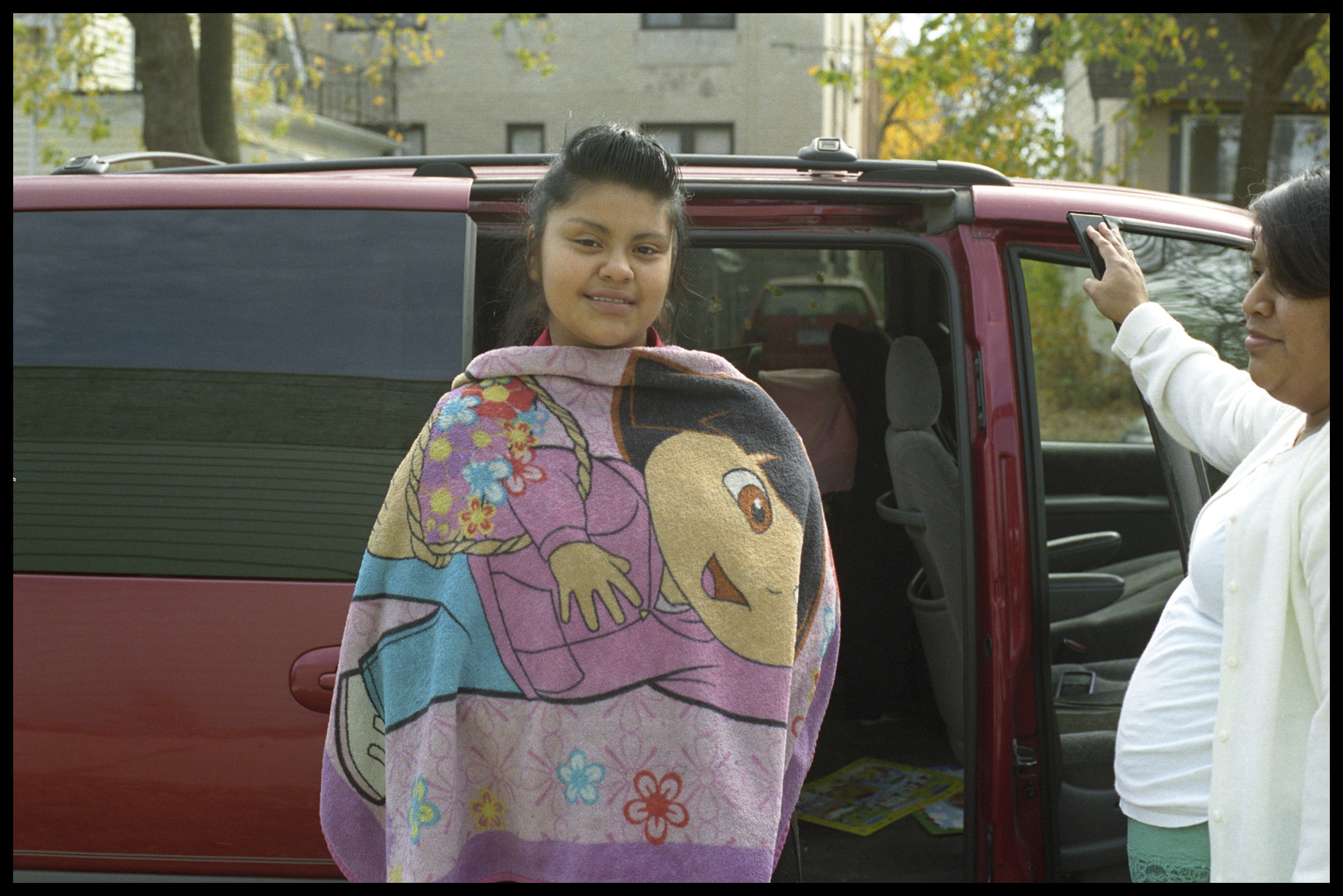
I chose the photograph entitled "Young Girl in the Dora the Explorer Blanket" by Wing Young Huie. This photograph was taken in South Minneapolis, Minnesota in 2012. It is a part of a project titled We Are the Other. This photo depicts a young girl Hispanic girl wrapped in a blanket with Dora the Explorer on it. At first glance this looks like and everyday easy going photograph and if one isn't analyzing it for underlying messages it would remain that way. When one takes a closer look and ponder the implications of this photo, however, it can be seen in a much deeper light. The young girl slightly resembles Dora the Explorer and by looking at her face she seems to be pleased to be holding the said blanket. Some might argue that this is because as a young Hispanic girl in the United States, Dora is a role model, someone from her culture that she can relate to and ,in a sense, idolize.
In Margaret Atwood's The Handmaid's Tale, different characters are "othered" or singled-out through language. In Kate's case she was renamed. She lost her sense of self control and her personal identity by being renamed "Offred". This was true for all the Handmaids. Not having a name that gave them a individual identity set them apart from other women in society and forced them to be pooled into a generalized category. They no longer had free will or the ability to identify themselves aside from the Commander and Wife they were given to.This is how Gilead "othered" the Handmaids. In Wing Young Huie's "Young Girl in the Dora the Explorer Blanket", the young girl is "othered" through stereotypes. Dora the Explorer, in a sense is a projection of American society views young Hispanic girls. Whether she is aware of it or not this young girl is playing directly into the stereotypes both good and bad about the women of her culture. In this case language isn't what is used to show the "othering" of this girl, but rather image and common symbols. The Dora the Explorer blanket represents the common stereotypes of Hispanic women.
Subscribe to:
Posts (Atom)